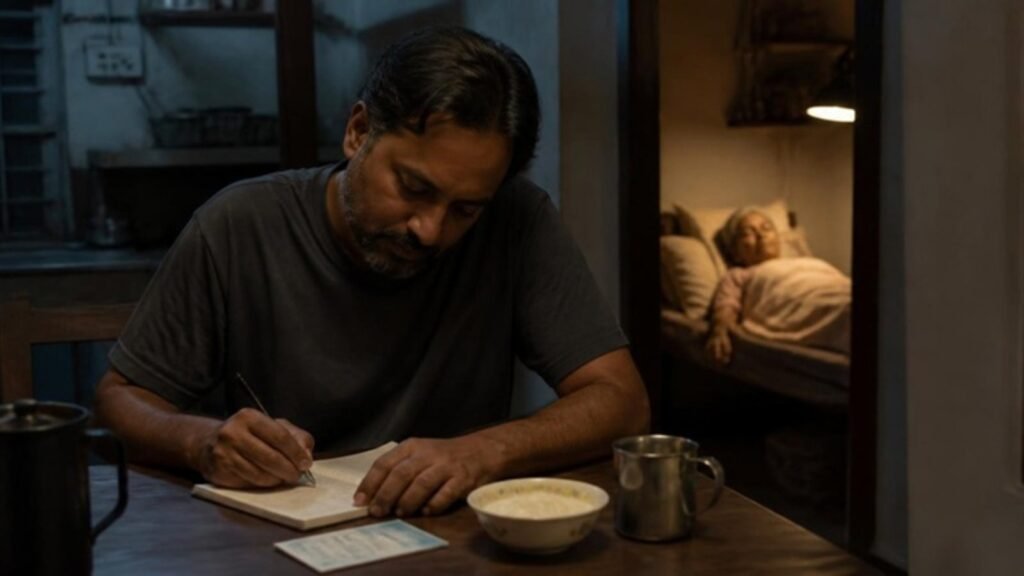
Over the years, many sons, daughters and spouses have asked me what they should feed someone they love who is going through cancer treatment. I’ve answered that question so many times that I decided to write the answer down, as a letter. The name is invented. The worries are real.
Dear Suresh,
You asked me after your mother’s clinic visit, standing in the corridor with her file under your arm, what you should be cooking. You looked as though you hadn’t slept. I didn’t give you a proper answer then, so here it is.
First, the thing I most want you to hear: you are not failing if she isn’t eating much. Cancer and its treatment change appetite, taste and digestion in ways no amount of good cooking can fully override. Your job is not to win every meal. It is to keep her going, gently, across many weeks.
Now, the practical things.
Weight matters more than you might think
Please weigh her once a week, same scale, same time of day, and write it down. Losing weight during cancer treatment is common, and it is not harmless. Losing weight usually means losing muscle. Lower muscle reserves can make treatment harder to tolerate and recovery slower. European cancer nutrition guidelines advise that every patient should be checked for nutrition problems early and regularly, not only once they look thin. If she is losing weight, tell her oncologist at the next visit and ask to see a dietitian. Don’t wait for them to ask you.
Forget “healthy eating” for now
I know this sounds odd from a doctor. But the rules for a healthy 50-year-old trying to avoid heart disease are not the rules for a woman in chemotherapy who is losing weight. Right now the priority is enough energy and enough protein. Ghee in her kanji is not a sin. A sweet payasam made with milk, if that’s what she will eat, is a good day’s work.
The guidelines suggest that people with cancer generally need more protein than healthy adults, above 1 g per kilogram of body weight a day and often towards 1.5 g/kg. In everyday terms: some milk, curd, egg, fish, dal or payar at every meal she can manage.
Small, often, and on her terms
Three large meals may be impossible. Six small ones may not be. Keep things within reach: a flask of milk-based drink, a boiled egg, a small bowl of avil (beaten rice) with milk and banana. Offer, don’t insist. She will eat more when it doesn’t feel like a test.
If the smell of cooking makes her nauseous, cold or room-temperature food is often easier. Cook while she rests in another room, and let the kitchen air out before she comes in.
When food tastes wrong
Many patients tell me food tastes of metal, or of nothing. Some find that a little more tamarind, lime or inji (ginger) helps. Others prefer bland food. Plastic or wooden spoons sometimes help with the metal taste. Keep her mouth clean with gentle rinses, because a sore mouth is the end of appetite. Mention any mouth ulcers to her team. They are treatable.
Please be wary of miracle diets
You will be sent videos, Suresh. Relatives and well-meaning neighbours will tell you about diets that “starve the cancer”: no sugar, no milk, only juices, only one particular root or powder. I understand why these spread. They give frightened people something to do. But restrictive diets during treatment can speed up weight and muscle loss, and there is no good evidence that any of them cures cancer. If you want to try something, please tell her oncologist first. Some herbal products also interact with chemotherapy.
Keep food safe
Chemotherapy can lower her ability to fight infections. During those periods: boil water, cook eggs and fish thoroughly, avoid food that has stood out for hours, and wash your hands before preparing her food. Her team will tell you when her counts are low.
Know when to ask for more help
Call her team if she can’t keep food or fluids down for a day, if she is passing very little urine, if she has lost several kilos, or if swallowing has become painful. Sometimes people need a prescribed nutrition supplement, and occasionally a feeding tube for a while, to get through a difficult phase of treatment. Those are not signs of defeat. They are tools to help her finish what she has started.
And you
Eat something yourself. Sleep when someone else can sit with her. Caregivers burn out quietly, and she needs you for the whole journey, not just this week.
You’re doing better than you think.
Warmly,
Dr. Praveen G Pai
Reference
- Muscaritoli M, Arends J, Bachmann P, et al. ESPEN practical guideline: clinical nutrition in cancer. Clin Nutr. 2021;40(5):2898–2913.